
What Size Soccer Ball Does My Child Need? Age-by-Age Guide
What Size Soccer Ball Does My Child Need? Age-by-Age Guide
Quick answer: Soccer ball sizes are determined by age, with Size 3 for younger children (3-8), Size 4 for older youth (8-12), and Size 5 for teens and adults. Always confirm with your child's league for specific requirements.
Updated June 2026. This guide is for parents who are new to youth soccer or are unsure which soccer ball size is appropriate for their child's age and developmental stage.
Understanding Youth Soccer Ball Sizes
Choosing the right soccer ball size for your child is crucial for their development, enjoyment, and safety on the field. A ball that's too big or too heavy can be difficult for young players to control, leading to frustration and hindering their ability to learn fundamental skills like dribbling, passing, and shooting. Conversely, using an appropriately sized ball makes the game more accessible and fun, encouraging more touches and confidence.
Soccer ball sizing is standardized by governing bodies like FIFA, but youth sizes are specifically designed to accommodate the physical capabilities of younger players. These balls are generally lighter and have a smaller circumference than the adult-standard ball. The progression through different sizes mirrors a child's growth and increasing coordination. It's important to note that while age is the primary determinant, some leagues or coaches may have specific recommendations or requirements, so always check with your child's team or league before making a purchase.
This guide will break down the different soccer ball sizes, the age groups they are intended for, and provide practical tips to help you make the best choice for your young athlete. Understanding these distinctions will not only help you purchase the correct ball but also appreciate why certain sizes are recommended for different stages of development. For a broader overview of age-specific soccer, you can explore our comprehensive youth soccer by age guide.
Size 3 Soccer Balls: The Starting Point
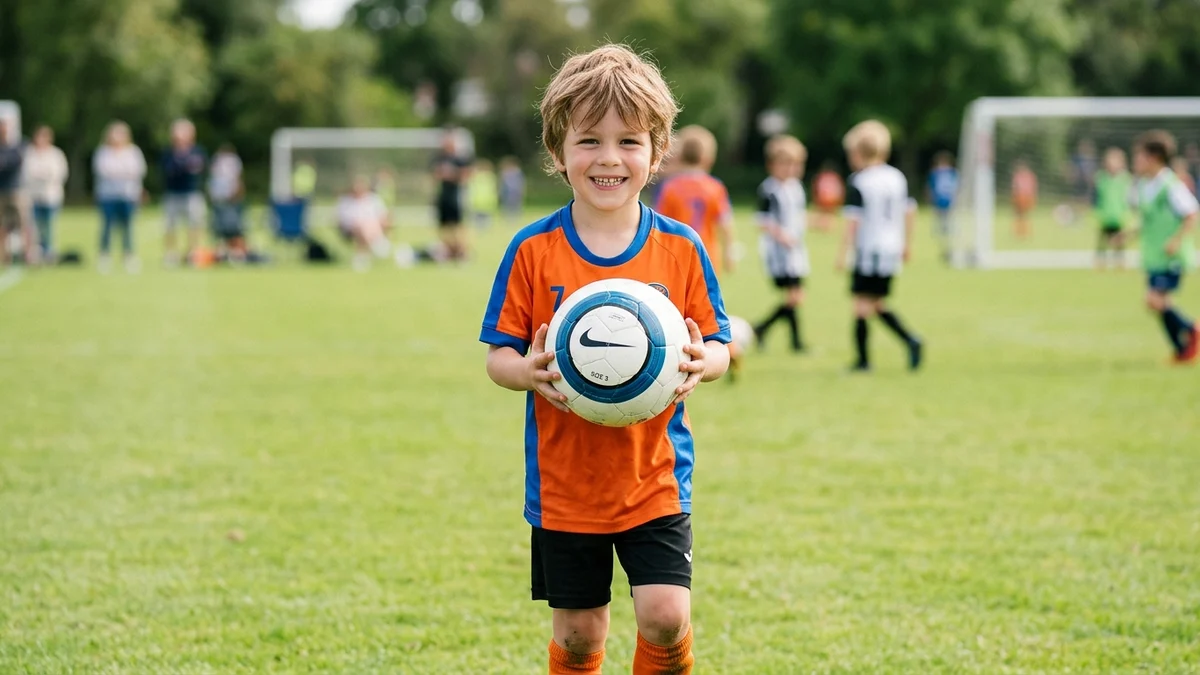
The Size 3 soccer ball is the smallest standard size and is designed for the youngest players. It typically has a circumference ranging from 23 to 24 inches (58-60 cm) and weighs between 11 and 12 ounces (310-340g). These specifications make the ball lighter and easier for small children to kick, control, and maneuver.
This size is ideal for children in the U6, U7, and U8 age groups, which generally covers ages 3 through 8. For children just beginning their soccer journey, a Size 3 ball is invaluable. Its manageable size and weight allow them to develop fundamental skills like dribbling with their feet, making basic passes, and getting comfortable with the ball without being overwhelmed. The reduced impact also makes it safer for heading practice, though heading is typically introduced at later ages.
Beyond recreational play for very young children, Size 3 balls also play a role in skills training for players of all ages, particularly in the form of futsal balls. These indoor soccer balls, often a Size 3, are designed for hard surfaces and are typically lighter and have less bounce than traditional soccer balls. They are excellent for developing close-control dribbling, quick footwork, and passing accuracy in confined spaces, making them a valuable training tool even for older players looking to hone their technical skills. If you're considering specialized training equipment, you might find our reviews on best futsal balls helpful.
Size 4 Soccer Balls: The Youth Standard
Moving up, the Size 4 soccer ball is the standard for most youth soccer players in the United States. Its circumference measures between 25 and 26 inches (63-66 cm), and it weighs approximately 12 to 13 ounces (350-390g). This size represents a natural progression from the Size 3, offering a slightly larger and heavier ball as children's coordination and strength improve.
Size 4 balls are typically used for players in the U9, U10, U11, and U12 age groups, which generally encompasses children aged 8 to 12. This is the ball size you will most commonly encounter in youth recreational leagues and many competitive club environments for this age range. By this stage, players have developed better control and striking power, making the Size 4 ball an appropriate challenge.
Using a Size 4 ball at this age helps players continue to refine their skills. The increased size and weight encourage stronger kicks, more accurate passing over longer distances, and better control during dribbling. It bridges the gap between the beginner-focused Size 3 and the full-sized adult ball, preparing players for the demands of the game as they get older and advance to higher levels of play. For context on what these age groups might be playing, consult our youth soccer rules by age group resource.
Size 5 Soccer Balls: The Official Standard
The Size 5 soccer ball is the official and standard size used in professional soccer worldwide, as regulated by FIFA. It has a circumference of 27 to 28 inches (68-70 cm) and weighs between 14 and 16 ounces (410-450g). This is the largest standard ball size and is designed for players who have developed the necessary physical strength, coordination, and technique to handle it effectively.
Size 5 balls are used for players aged 13 and older, including all adult players and professional athletes. This is the ball used in U13 and older youth leagues, high school soccer, college soccer, and all professional competitions. For players transitioning into this size, it marks a significant step up in the physical demands of the game.
It's important to understand why Size 5 balls are not suitable for younger players. Their larger size and greater weight can significantly hinder a younger child's ability to control the ball, pass accurately, or shoot with power. Attempting to use a Size 5 ball with players who are not physically ready can also negatively impact their technique, potentially leading to improper kicking mechanics or difficulty with aerial play. Players who have consistently used Size 4 balls will find the transition to Size 5 manageable as their physical development aligns with the ball's specifications. Some players may also find specific models like the Select Numero 10 to be excellent choices as they move into this size range and beyond.
Soccer Ball Size Comparison Table
To help you quickly reference the different soccer ball sizes, here is a comparative table:
| Size | Circumference | Age Group | Weight | Notes |
|---|---|---|---|---|
| Size 3 | 23-24 inches (58-60 cm) | U6, U7, U8 (Ages 3-8) | 11-12 oz (310-340g) | Lighter, easier to control, great for beginners and skills training. Also used for futsal balls. |
| Size 4 | 25-26 inches (63-66 cm) | U9, U10, U11, U12 (Ages 8-12) | 12-13 oz (350-390g) | Standard youth ball; step up in coordination and power. |
| Size 5 | 27-28 inches (68-70 cm) | U13 and older (13+), Adults, Professionals | 14-16 oz (410-450g) | FIFA standard ball size; too heavy for younger players. |
Tips for Buying Your Child's Soccer Ball
When purchasing a soccer ball for your child, consider these practical tips to ensure you get the best value and the right product for their needs. First and foremost, check with your child's league or coach before buying. Many leagues provide the official match balls for games, and coaches often have specific recommendations for training balls that align with the equipment used in practices. This can save you money and ensure your child is using the same type of ball their team uses.
For general training and practice at home, a single ball of the appropriate size for your child's age group is usually sufficient. If your child is younger (ages 3-8), a Size 3 ball is a great starting point. For children aged 8-12, a Size 4 ball is typically the best choice. If your child is 13 or older, they will use a Size 5 ball. When looking for quality, consider reputable brands known for producing durable and well-performing soccer balls. Popular and reliable choices for youth include Adidas Glider, Nike Strike, Select Numero 10, and Wilson Soccer Balls. These brands offer a good balance of quality and price for recreational and developmental play.
It's also wise to avoid ultra-cheap, unbranded balls. While they might seem like a bargain, these balls often suffer from inconsistent inflation, poor stitching, and rapid wear, leading to a disappointing experience and needing replacement sooner. Always check the ball pressure before your first use; the recommended pressure is usually printed on the ball itself, typically around 6-8 psi for youth sizes. Proper inflation is key to the ball's performance and longevity. For players looking to enhance specific skills, especially quick footwork and close control in smaller areas or for indoor training, a lighter futsal ball (often a Size 3) can be an excellent supplementary training tool for players of any age.
Find Youth Soccer Clubs Near You
Choosing the right soccer ball is just one part of your child's soccer journey. The next step is finding a great team and club for them to play and develop with. Explore our comprehensive directory to find youth soccer clubs near you and get your child involved in the beautiful game.
Frequently Asked Questions
What size soccer ball do I need for a 5-year-old?
My child is 9, what size soccer ball should they use?
When do kids start using a Size 5 soccer ball?
Why is the right soccer ball size important for my child?
Are there different soccer ball sizes for indoor and outdoor play?
Should I always buy the age-recommended soccer ball size?
Related Articles

How to Gain Confidence in Soccer: 8 Proven Mental Strategies
Build your soccer confidence with 8 proven mental strategies — positive self-talk, goal-setting, handling mistakes, and pre-game routines for youth players.

How to Get Better at Soccer: 10 Proven Tips for Youth Players
Want to get better at soccer? These 10 proven tips cover ball control, fitness, mental toughness, tactical thinking, and consistent training habits.
Soccer Speed Training: 7 Drills to Get Faster on the Field
Improve your speed on the soccer field with interval sprints, acceleration drills, and agility work. Proven speed training methods for youth players and coaches.

Fun Christmas Soccer Training Activities for Kids and Teams
Find fun Christmas soccer training activities for kids, teams, and winter break sessions, with festive drills for dribbling, passing, and shooting.